

Bathroom Sink Drain Parts Explained (Flange, Stopper, Tailpiece Guide)
You don’t really decide to learn about bathroom sink drain parts. It sort of happens to you. At first, it’s small. Water takes slightly longer to go down.
by Sooraj T. Mathews
May 25, 2026
4 minute read
Table of Contents
- What Are the Main Parts of a Bathroom Sink Drain?
- It doesn’t feel like one system (and that’s the confusing part)
- The flange — looks fine, usually isn’t the focus… until it is
- The stopper — this is where it starts feeling slightly unreliable
- The tailpiece — not complicated, still causes problems
- Water flow — nothing complicated here
- When something’s wrong, it’s usually not random
- Replacing parts — simpler than it looks, but still easy to mess up
- Fixing it yourself… or stopping halfway
You notice it once, maybe twice, then stop paying attention. Then there’s a smell. Not constant—just shows up randomly and disappears again, which somehow makes it easier to ignore.
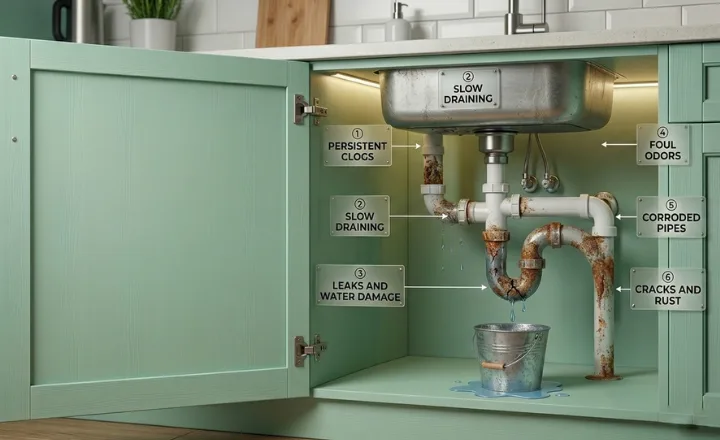
But then it becomes something you cannot ignore. Usually that moment is when you open the cabinet and realize something underneath isn’t completely dry. Not dripping. Not flooding. Just… damp in a way it shouldn’t be.
That’s when you actually start looking.
And what you see… isn’t immediately helpful. At least not the first time you look at it. Maybe the second time too. Just pipes, joints, a few metal pieces. No labels. No clear “this does that” kind of layout. You kind of expect it to be clearer than it is.
It isn’t.
What Are the Main Parts of a Bathroom Sink Drain?
If someone asked you without warning, you’d probably say flange, stopper, pipe.
That’s not wrong.
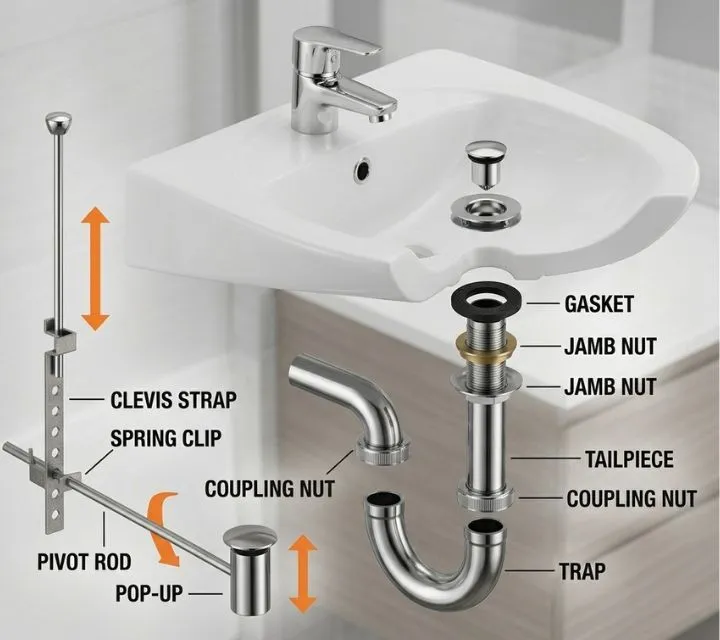
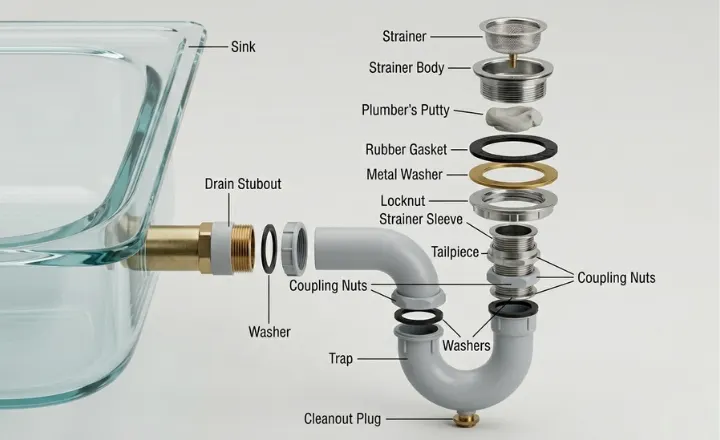
A more complete version would be the drain flange, stopper, drain body, gasket, locknut, and tailpiece. Those are the main bathroom sink drain parts that move water out while keeping things sealed so leaks and sewer gases don’t come back up.
Even with that list, it still doesn’t immediately click when you’re looking at it in real life. You sort of expect it to, but it doesn’t—at least not right away.
You kind of have to trace it. Start from the sink, follow it down, then go back and check again because something didn’t quite line up the first time.
And sometimes even after that, it still feels slightly… unclear. Not confusing exactly, just not fully clear either. Or maybe it is clear, just not in a neat way.
It doesn’t feel like one system (and that’s the confusing part)
Up top, everything is obvious.
The sink drain flange sits at the bottom of the basin. The stopper moves up and down. There’s an overflow hole somewhere above, and a rod behind the faucet that controls it.
You don’t think about any of that.
Underneath is where it slows down.
There’s the drain body, a gasket pressed between surfaces, and a locknut tightening everything together. Then the tailpiece drops down into the trap.
Nothing about that is complicated. But it doesn’t present itself clearly either. You don’t see it as a “system” right away—you see it as pieces that happen to be connected.
It takes a bit before your brain starts grouping them together. Or maybe “grouping” isn’t the right word… more like getting used to how they connect.
And even then, it’s not like it suddenly becomes obvious. It just becomes… less confusing. Slightly more familiar, maybe. Not perfectly clear, just clearer than before.
The flange — looks fine, usually isn’t the focus… until it is
Most people don’t suspect the flange. It just sits there. But it’s sealing the sink opening, and that seal can fail without making a big deal about it. You might notice water collecting around the edge. Or not. Sometimes nothing shows on top, but underneath there’s moisture that keeps appearing. That’s usually the giveaway.
It’s rarely the metal. It’s the seal under it. Putty dries out, or wasn’t applied evenly. And then there’s the spinning issue. You try tightening it and it just turns with you. That’s usually where things stop feeling simple.
Some people keep tightening anyway, hoping it catches. It doesn’t. It just keeps turning. And that’s usually when they stop and rethink what’s actually happening.
The stopper — this is where it starts feeling slightly unreliable
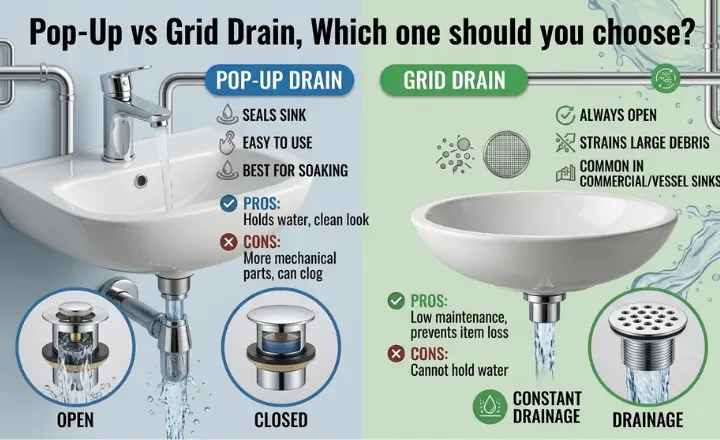
It should be simple. And for a while, it is. The pop-up version uses that linkage system—rod behind the faucet, another rod underneath, a few connection points. When everything lines up, it works without any effort.
When it doesn’t, it feels inconsistent. Won’t stay closed. Drops when you didn’t touch it. Nothing actually broken most of the time. Just slightly off. Slightly misaligned, maybe—that’s usually closer to what’s happening.
Sometimes it’s buildup too. Not enough to block water, just enough to interfere with movement.
Then there’s the push type. Press it down, press it again. That’s it. But once it starts sticking, you’re not really fixing anything. You’re replacing it. Or trying to clean it first, then replacing it anyway.
That’s usually how it goes. Or at least… that’s how it tends to go most of the time. Not always, but often enough.
The tailpiece — not complicated, still causes problems
The drain tailpiece pipe is just a straight section running down. No moving parts. No adjustments. Still ends up being part of the issue sometimes.
It relies on a washer and a compression fitting. If the washer wears out, or the pipe isn’t sitting straight, you get a slow leak. Not obvious at first. More like something that shows up over time. Dampness. A slight smell. Something that doesn’t go away completely.
Sometimes tightening it fixes it. Sometimes tightening it shifts things just enough to make it worse. That part throws people off more than it should. It seems simple, but it doesn’t always behave that way. Which is probably why it gets overlooked.
Water flow — nothing complicated here
Water goes down. Through the flange, past the stopper, into the drain body, down the tailpiece, into the trap. That trap holds water on purpose. If that seal isn’t there anymore, you notice.
Usually by smell. Or sometimes before that. Hard to miss either way, even if you’re not sure what caused it at first.
When something’s wrong, it’s usually not random
It tends to point somewhere. A leak under the sink usually means the gasket or locknut. Water near the stopper rod points to the pivot connection. Slow draining is buildup more often than anything else.
Smells tend to come from the trap or tailpiece. Sometimes people assume it’s something major. It usually isn’t.
Just one part not doing what it’s supposed to. Or not doing it properly anymore. Sometimes just worn out, which is easy to overlook.
Replacing parts — simpler than it looks, but still easy to mess up
Most drains are 1 1/4 inch. That’s your starting point.
After that, it’s checking overflow compatibility, thread fit, and finish. That last part sounds minor, but it stands out if it doesn’t match.
Brass lasts longer. Plastic is easier to work with. Both are fine. Some people overthink this part. You don’t really need to.
Fixing it yourself… or stopping halfway
Some fixes are quick. Tightening something. Adjusting the stopper. Replacing a tailpiece.
A full replacement takes more patience. You have to line everything up properly and get the seals right without forcing anything. And this is usually where things slow down. Because if it doesn’t sit right the first time, you take it apart, try again, and then start wondering if you’re missing something. That’s usually when people decide to call someone. Not because it’s difficult. Just because it gets frustrating. And a bit repetitive at that point. Maybe more than a bit, depending.
If you keep looking at it, it starts to make a bit more sense. Not all at once—more like in pieces. You notice one connection, then another, and eventually it’s not as confusing as it looked at the start. Still not perfect, but… enough to work with.
Frequently Asked Questions
What are the main parts of a bathroom sink drain?
The main parts include the drain flange, stopper, drain body, gasket, locknut, tailpiece, and trap.
Why is my bathroom sink leaking underneath?
Leaks usually come from worn gaskets, loose locknuts, damaged washers, or improperly aligned tailpiece connections.
What does a sink drain flange do?
The flange seals the sink opening and directs water into the drain system while helping prevent leaks.
Can I replace a bathroom sink stopper myself?
Yes. Most bathroom sink stoppers can be replaced using standard tools and compatible replacement parts.
-min (1).png)
Sooraj T. Mathews
Sooraj is a content creator with 5 years of experience and a knack for making SEO work feel like storytelling. With 4 years in the digital marketing game, he blends strategy and creativity to craft content that clicks and converts. Outside of work, you'll find him unwinding with a good puzzle or getting lost in a great book—always curious, always learning.
.webp)
.webp)
.webp)
.webp)